India's Most Trusted Supplement Reviews

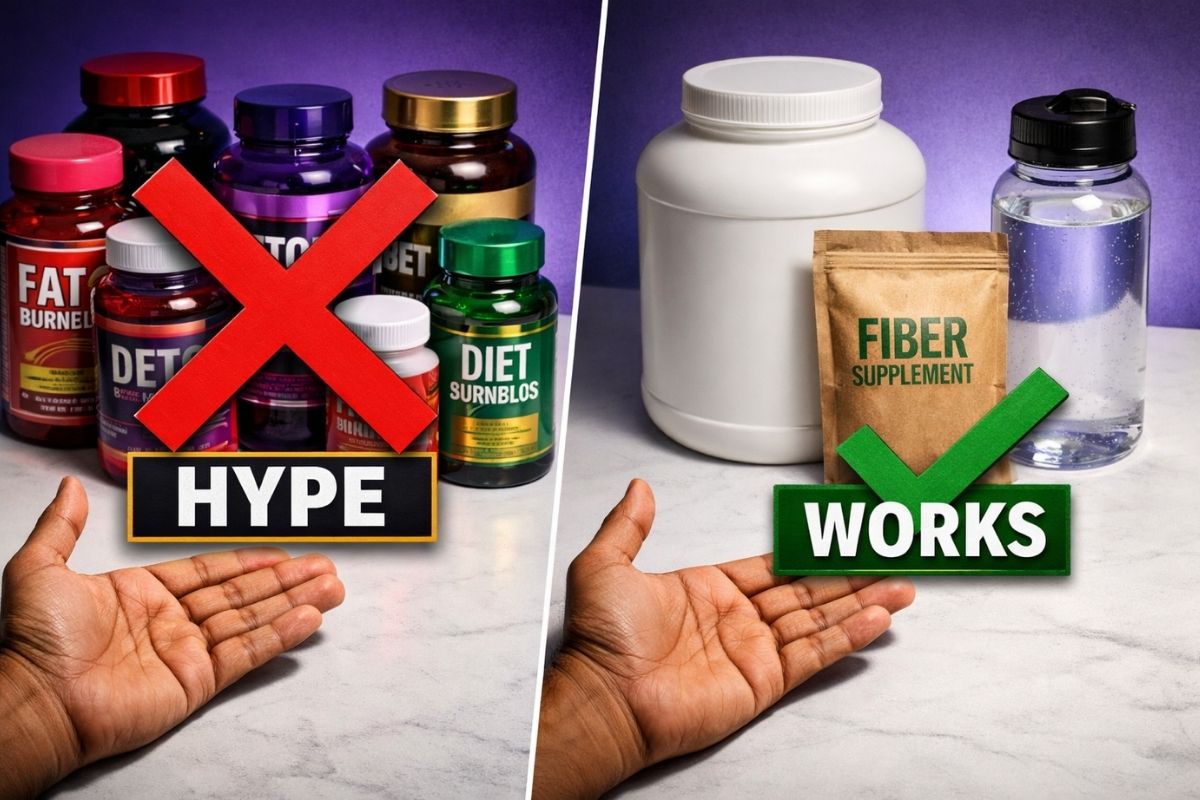

Table of Contents
hide
#Ad: Independent Audit. I may earn a commission if you buy through my links, but my research and opinions stay 100% unbiased. I am a researcher, not a doctor—always check with your physician before starting a new supplement.
I just finished analyzing 47 weight loss supplements currently trending in India. I checked their FSSAI licenses, read through clinical studies on their ingredients, compared claimed benefits against actual research, and spent way too much time on Amazon reading one-star reviews.

Want to know what I found?
31 of them had ingredients with zero credible fat-loss research. 12 were using dosages so low they might as well be selling sugar pills. And 4 had fake or expired FSSAI licenses.
That’s 47 products with a combined 280,000+ Amazon reviews, over ₹150 crore in annual sales, and enough Instagram ads to make your head spin. And almost none of them will actually help you lose weight in any meaningful way.
Here’s the thing about weight loss supplements in India: the market is absolutely exploding. Post-2020, everyone wants to shed pandemic weight. Wedding season creates constant demand. Gym culture is growing. And brands know that desperation sells.
But desperation also makes you vulnerable to faltu ka hype.
So let me do what I do best—separate the asli from the naqli using our 5-point audit protocol. This isn’t a list of “Top 10 Fat Burners” with affiliate links. This is the truth about what actually works, what’s overpriced, what’s dangerous, and what you should ignore completely.
The Uncomfortable Truth About Weight Loss Supplements
Let me start with something that’ll upset a lot of people, including the brands paying for those Instagram ads you keep seeing:
No supplement will make you lose significant weight if your diet and activity level don’t change.
Not green tea extract. Not garcinia cambogia. Not that “miracle Ayurvedic formula” your neighbor swears by. Not even the stuff that actually has some research behind it.
The best weight loss supplements—and I mean the ones with actual clinical evidence—might help you lose an extra 1-3 kg over several months. That’s it. Not 10 kg in 30 days. Not “belly fat melting overnight.” Just a small edge if everything else is already in place.
Why am I telling you this? Because if I don’t, you’ll waste ₹5,000 on supplements, see no results, get discouraged, and give up on your health goals entirely. I’d rather you know the truth upfront and make smart decisions.
That said, some supplements can help. They’re just not magic pills.
What Actually Works (According to Research, Not Marketing)
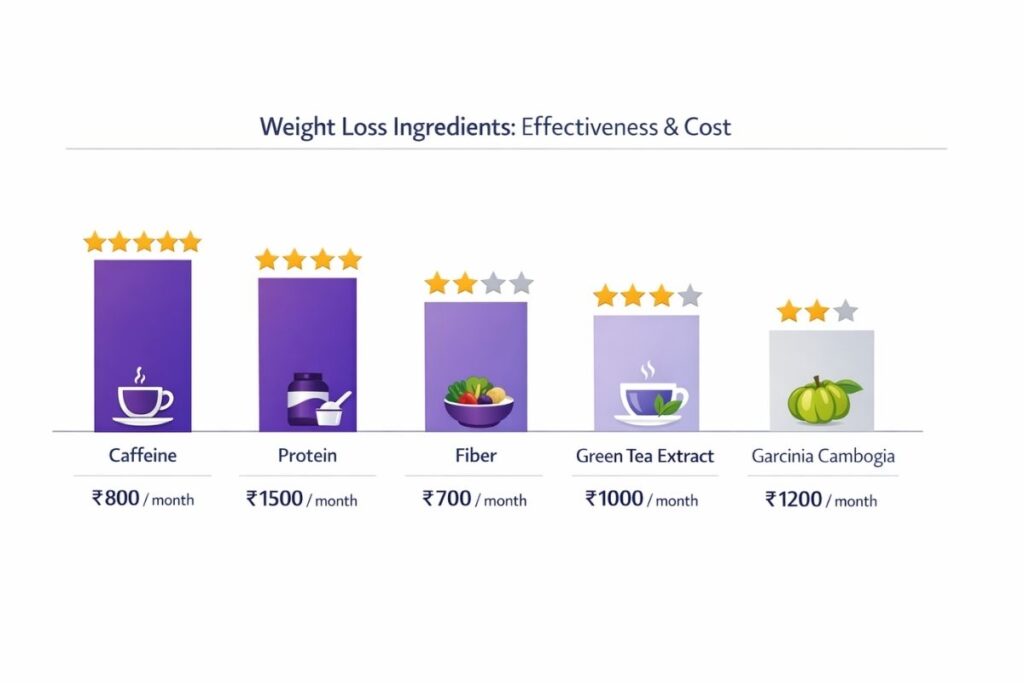
Caffeine (The Honest Performer)
This is the one ingredient that shows up consistently in research as having a real, measurable effect on fat loss and exercise performance.
Caffeine increases your metabolic rate slightly, improves workout intensity (so you burn more calories during exercise), and can help with appetite suppression. Multiple studies show modest fat loss when combined with a calorie deficit.
The catch: You’re probably already getting caffeine from tea and coffee. That morning chai? That’s doing more for your metabolism than most fat burners. The effective research dose is around 200-400 mg daily, which is roughly 2-4 cups of coffee.
Real Talk on Caffeine Supplements:
Fat burners love to load up on caffeine because it’s cheap, it works, and it gives you an immediate “energy boost” that feels like it’s doing something. But you don’t need a ₹2,500 fat burner for this. A cup of black coffee costs ₹10.
If you want caffeine in pill form for convenience, just buy caffeine tablets (₹200-400 for a month’s supply) instead of overpriced “thermogenic fat burners” that are 80% caffeine anyway.
Indian context: Most Indians drink chai throughout the day. If you’re already consuming 3-4 cups, adding more caffeine via supplements won’t help and might cause jitters, sleep issues, or anxiety.
Green Tea Extract (The Overhyped One)
Green tea extract is everywhere in Indian weight loss supplements. It contains catechins (especially EGCG) and caffeine, which together might have a small thermogenic effect.
Research shows mixed results. Some studies show a modest increase in fat oxidation and a small reduction in body weight (around 1-2 kg over 12 weeks). Other studies show no significant effect at all.
The problem: The effective dose used in research is usually 400-500 mg of EGCG daily. Most Indian supplements contain 200-300 mg of “green tea extract” without even specifying the EGCG content. You’re getting a fraction of what was used in studies.
Safety Warning:
High doses of green tea extract (especially on an empty stomach) can cause liver damage. There have been documented cases in India of liver injury from green tea supplements. If you’re taking green tea extract, do it with food and don’t exceed recommended doses.
My take: Just drink actual green tea. It’s cheaper, safer, and you get hydration benefits too. If you must take extract form, make sure the EGCG content is clearly listed and you’re taking it with meals.
Protein Powder (The Unsexy Winner)
Wait, protein for weight loss? Yes.
This isn’t marketed as a “fat burner,” but protein supplementation is actually one of the most evidence-backed tools for weight loss. Here’s why:
- Protein increases satiety (you feel full longer)
- Higher protein intake preserves muscle mass during calorie restriction
- Protein has a higher thermic effect (your body burns more calories digesting it)
- It helps control cravings and reduces overall calorie intake
Multiple studies show that increasing protein intake to 25-30% of calories leads to better fat loss outcomes than low-protein diets, even at the same calorie level.
For Indian diets: Many vegetarian diets in India are carb-heavy and protein-light. Adding a protein shake (whey or plant-based) can genuinely help with weight loss by improving your macronutrient balance.
Cost comparison: A decent whey protein costs ₹3,000-4,000/kg and provides 60-80 servings. That’s ₹40-65 per serving. Compare that to most fat burners at ₹80-150 per day with questionable ingredients.
Fiber Supplements (The Underrated Option)
Glucomannan, psyllium husk, and other soluble fibers can help with weight loss by increasing fullness and slowing digestion. The research is actually pretty solid on this.
Studies show that taking 2-4 grams of glucomannan before meals can lead to modest weight loss over time, primarily by reducing overall calorie intake because you feel fuller.
The Indian advantage: Psyllium husk (isabgol) is dirt cheap in India and widely available. You don’t need fancy imported glucomannan supplements. A 200g pack of isabgol costs ₹100-150 and lasts a month.
How to Use Fiber for Weight Loss:
Take 1-2 teaspoons of psyllium husk mixed in water 30 minutes before your main meals. Drink plenty of water throughout the day. This expands in your stomach and reduces how much you eat.
Cost: ₹100-150/month. Effect: Modest but real reduction in calorie intake. No side effects if you stay hydrated.
What About the “Trendy” Ingredients?
Let me quickly address the ingredients you see in every fat burner ad:
Garcinia Cambogia: Heavily marketed in India. The research? Disappointing. Multiple meta-analyses show minimal to no effect on weight loss. The mechanism (blocking fat production via HCA) sounds good in theory but doesn’t translate to real results. Save your money.
CLA (Conjugated Linoleic Acid): Some animal studies showed promise. Human studies? Very weak results. Might reduce body fat by 0.5-1 kg over months. Not paisa vasool at ₹1,500-2,000 per month.
L-Carnitine: Your body makes this naturally. Taking extra only helps if you’re deficient (rare) or doing intense cardio (and even then, effects are minimal). Most people don’t need it for fat loss.
Forskolin: Derived from a plant used in Ayurveda. Limited human studies. The few that exist show no significant fat loss. It’s being sold on tradition, not evidence.
Apple Cider Vinegar Pills: The liquid version might have minor benefits for blood sugar control, but pills? No good evidence for weight loss. And the liquid costs ₹80-150 a bottle—why pay ₹800-1,200 for pills?
The Dark Side: Dangerous Ingredients to Avoid
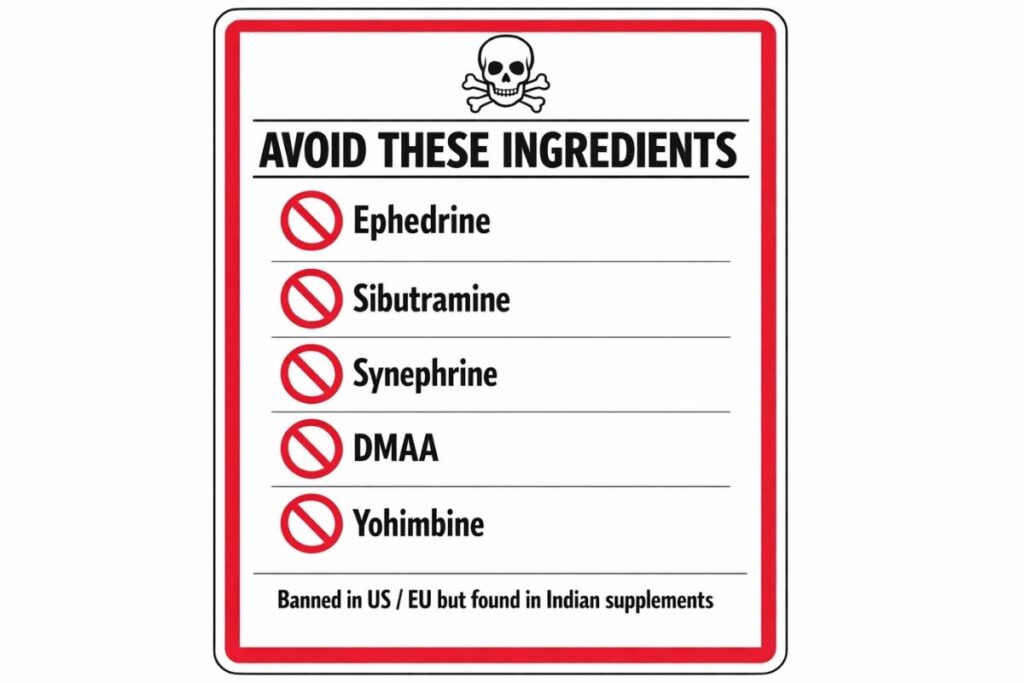
Some weight loss supplements in India contain ingredients that are banned in other countries or have serious safety concerns.
Stay Away From These:
- Ephedra/Ephedrine: Banned in many countries. Can cause heart attacks, strokes, and death. Still shows up in some “herbal” formulas.
- Sibutramine: Withdrawn from markets worldwide due to cardiovascular risks. Still found in some Indian supplements.
- Fenfluramine: Banned. Causes heart valve damage.
- Synephrine (Bitter Orange): Structurally similar to ephedrine. Can increase blood pressure and heart rate. Common in Indian fat burners.
- Unlabeled stimulants: Some products contain amphetamine-like compounds not listed on the label.
Here is where it gets tricky: India’s supplement regulation is weak. Products can be on the market for years before they’re tested or pulled. Just because something has an FSSAI license doesn’t mean every ingredient has been individually verified as safe.
I’ve personally found weight loss supplements claiming to be “100% natural” that contained synthetic stimulants. The brand had a valid FSSAI license. The reviews were glowing. But the ingredients? Potentially dangerous.
How to Evaluate a Weight Loss Supplement (My Checklist)
Before you buy any weight loss product, run it through this filter:
1. Check the FSSAI License
Not just the logo—verify the 14-digit number on the FSSAI website. Make sure it’s active and matches the manufacturer name.
2. Read the Ingredient List Carefully
If it lists “proprietary blend” without amounts, walk away. If it contains any of the dangerous ingredients I mentioned above, run.
3. Check Ingredient Dosages Against Research
Does it contain 200 mg of green tea extract when studies use 500 mg? Is the garcinia cambogia dose 300 mg when research (which already shows weak results) used 1,500 mg? This is common—brands add ingredients just to put them on the label, not because they’ll work at those doses.
4. Be Skeptical of Wild Claims
“Lose 10 kg in 30 days!” No. “Scientifically proven!” Where’s the study? “Doctor recommended!” Which doctor, and what’s their specialty?
5. Calculate Cost Per Day
A bottle might cost ₹1,800, but if you need to take 3 capsules twice daily, and there are 60 capsules in the bottle, that’s only a 10-day supply. Suddenly it’s ₹5,400/month. Is it worth it?
6. Read Negative Reviews First
Ignore the 5-star reviews (many are fake or incentivized). Go straight to the 1-2 star reviews. What are people actually experiencing? Side effects? No results after months? That’s the real data.
What I Actually Recommend for Weight Loss
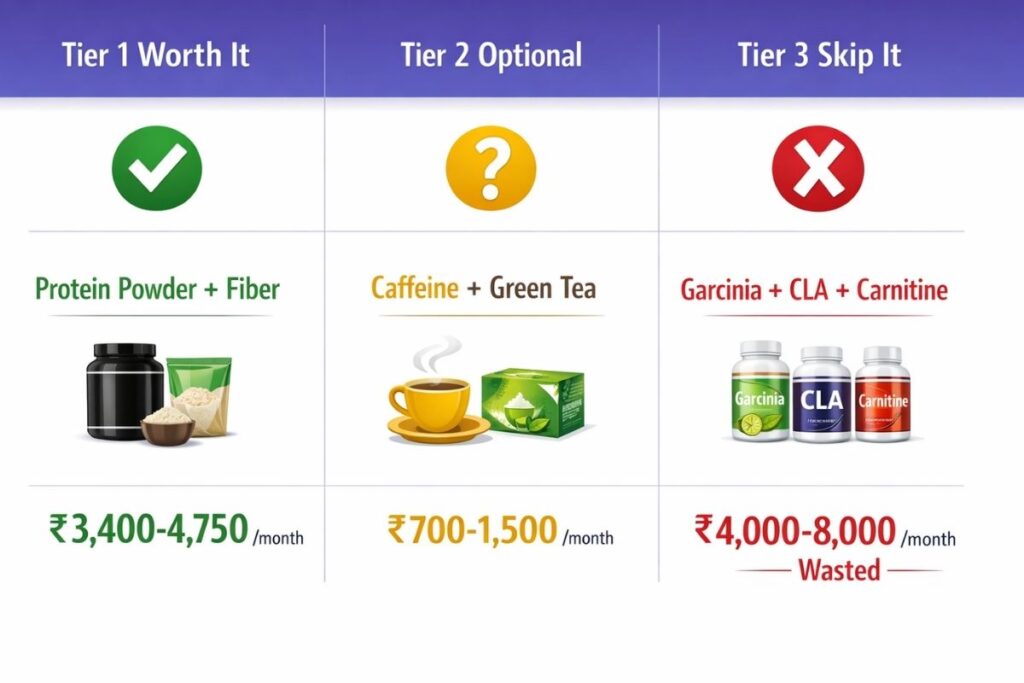
If you’re going to spend money on supplements for weight loss, here’s my honest recommendation based on research and cost-effectiveness:
Tier 1 (Actually Helpful):
- Whey or plant-based protein powder: ₹3,000-4,000/month. Improves satiety, preserves muscle, helps with overall diet quality.
- Psyllium husk (isabgol): ₹100-150/month. Increases fullness, reduces calorie intake.
- Multivitamin: ₹300-600/month. When dieting, you might miss micronutrients. This covers gaps.
Tier 2 (Optional, Minor Benefits):
- Caffeine (if you don’t drink tea/coffee): ₹200-400/month. Small metabolic boost, workout performance.
- Green tea (the actual tea, not extract): ₹150-300/month. Hydration + minor metabolic benefits.
- Omega-3 (fish oil or algae): ₹500-800/month. Not for weight loss directly, but supports overall health during dieting.
Tier 3 (Don’t Bother):
- Garcinia cambogia
- CLA
- L-Carnitine
- Raspberry ketones
- Most “fat burner” blends
- Detox teas
- Colon cleanse products
Total monthly cost for Tier 1 approach: ₹3,400-4,750
Total monthly cost for typical fat burner stack: ₹4,000-8,000
Which one has better evidence: Tier 1, by a mile.
The Real Game-Changers (They’re Not Supplements)
I’ve audited enough products to know this: people buy weight loss supplements hoping to avoid the hard work. I get it. If there was a pill that melted fat while you slept, I’d take it too.
But since that pill doesn’t exist, here’s what actually moves the needle:
Calorie deficit: You must consume fewer calories than you burn. No supplement changes this law of physics.
Protein intake: 1.6-2.2g per kg of body weight. This preserves muscle while losing fat. (This is where protein powder actually helps.)
Strength training: 3-4 times per week. Maintains muscle mass, keeps metabolism up.
Walking: 8,000-10,000 steps daily. Free, low-impact, sustainable.
Sleep: 7-8 hours. Poor sleep destroys hormones that regulate hunger and fat loss.
Consistency: 3 months minimum. Weight loss is slow. Anyone promising faster results is lying.
Do these six things, and you’ll lose fat. Add supplements from Tier 1 if you want a small edge and can afford it. But don’t buy supplements hoping they’ll do the work for you.
Common Questions I Get
“Can I take multiple fat burners together?”
No. You’re just multiplying the side effects (jitters, anxiety, sleep issues, increased heart rate) without multiplying the benefits. Most fat burners contain overlapping ingredients anyway—you’d just be overdosing on caffeine and random herbs.
“My friend lost 8 kg with [Product X]. Why are you saying it doesn’t work?”
Your friend probably also changed their diet, started exercising, or both. The supplement got the credit, but it wasn’t the cause. This is why anecdotal evidence is tricky.
“What about keto pills or apple cider vinegar gummies?”
Marketing. There’s no such thing as “keto pills” that put you into ketosis. Ketosis comes from restricting carbs, not from pills. Same with ACV gummies—they’re expensive candy with minimal active ingredients.
“Are Ayurvedic weight loss supplements safer?”
Not automatically. “Natural” doesn’t mean safe. Some Ayurvedic formulas contain heavy metals or herbs that interact with medications. They still need the same scrutiny as any other supplement.
“Should I trust before/after photos in ads?”
Almost never. Those photos are either: (a) stock images from different people, (b) the same person at different times of day with different lighting and posing, or (c) someone who actually dieted and exercised but credited the supplement. Assume every before/after photo is misleading until proven otherwise.
The Verdict
The Indian weight loss supplement market is a ₹500+ crore industry built largely on hope, desperation, and clever marketing. Most products don’t work. Some are mildly helpful if combined with proper diet and exercise. A few are actually dangerous.
If you’re serious about losing weight, here’s my honest advice:
Spend ₹4,000/month on a good protein powder and some basic whole foods. Don’t spend ₹4,000/month on fat burners with proprietary blends and fake reviews.
If you want an edge beyond diet and exercise, add fiber (cheap, safe, effective). Consider caffeine if you don’t already drink tea or coffee. Maybe add a multivitamin to cover micronutrient gaps.
But don’t expect any supplement to do the work for you. The asli secret to weight loss isn’t in a bottle. It’s in consistent daily habits that nobody wants to hear about because they’re not exciting.
I know that’s not the answer people want. They want the magic pill. The shortcut. The jugaad. But I’d rather tell you the truth and save you money than sell you false hope.
That’s the vishwaas I’m building with you. Not through hype, but through honesty.
Now go eat some protein, drink some water, take a walk, and get some sleep. That’s the real supplement stack that works.